Civil Engineer in Biomedical Engineering
Applying engineering knowledge to healthcare to support medical professionals and improve patient care is the primary role of biomedical engineers.
This Master's programme combines engineering and scientific disciplines, bringing together specialised training in life sciences, organised in collaboration with the Faculties of Science and Medicine, and a strong foundation in engineering techniques and methods.
Students can choose between three specialisations:
-
Biomechanics, Biomaterials and Tissue Engineering: Focuses on material characterisation and synthesis, interactions with living tissues, human motion analysis, biomedical robotics and active prostheses.
-
Digital Medicine: Covers medical device modelling, numerical simulation of physiological processes, the development of new therapies and the analysis of clinical and molecular biology data.
-
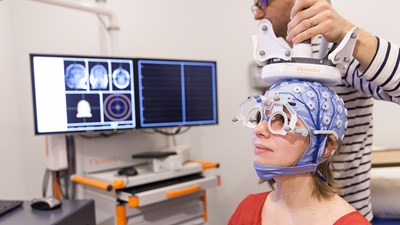
Neural Systems: Focuses on magnetic resonance imaging, brain activity measurement and interpretation, and neuroengineering.
Internship and Master's thesis opportunities:
-
Mandatory internship: Students must complete either an approximately one-month observation internship or a two-month immersion internship in a company. It takes place between the first and second years of the Master's programme.
-
Master's thesis: A research project that can be carried out in collaboration with a company, corresponding to approximately four months of full-time work.
If your company would like to propose a Master's thesis topic:
https://www.facsa.uliege.be/cms/c_3265897/fr/facsa-travail-de-fin-d-etudes-tfe
More information about the programme:
https://www.programmes.uliege.be/cocoon/20222023/formations/bref/A2UBIO01.html